


Cbd Cannabinoid Or Cannabidiol

In short: CBD (cannabidiol) is a non-psychoactive cannabinoid found in hemp. It does not cause intoxication and is valued as a full-spectrum plant extract in wellness products.
CBD cannabinoid or cannabidiol(C21H30O2) is one of the more than 140 phytocannabinoids of the hemp plant found so far. But it is definitely one of the most important! It was discovered in 1940. Cannabidiol is most abundantly represented in industrial hemp, from which we also obtain it for our products.
Cannabidiol is obtained through an extraction process
The most common extraction processes used to obtain cannabidiol are:
- alcoholic extraction and
- extraction with supercritical CO2.
The extraction itself is a chemical method in which, with the help of a solvent (alcohol or CO2), the desired molecules are extracted from a solid or liquid into another liquid phase.
How do we introduce CBD cannabinoid into the body?
CBD cannabinoid can be introduced into the body in different ways. The most common are:
- Smoking or vaporizer,
- oral intake,
- entry under language.
When we put CBD cannabinoid under the tongue (CBD paste, CBD drops) and hold it there for about 60 seconds, the molecules are absorbed directly into our bloodstream.
- CBD is swallowed (capsules, oil):
in this case, the molecules are absorbed into our digestive system and are further metabolized in the liver, which after a certain time sends the active substances into our bloodstream.
- It can also be inserted with suppositories (anal insertion). The anal mucosa is very effective because the absorption itself is very good and the results are felt quickly.
- Through the skin (ointment) – CBD cannabinoid is absorbed through the skin and affects the cells below the surface of the skin. This reaction takes place without absorption into the bloodstream.
CBD and the endocannabinoid system
CBD has its main effect on the peripheral nervous system and the immune system, or rather on the CB2 cannabinoid receptors, which are located mostly on immune cells. Immune cells circulate throughout our body and brain via our bloodstream.
In this way, CB2 cannabinoid receptors can get information about the condition of: skin, liver, digestive system, bones, lungs, cardiovascular system and pass it on to our endocannabinoid system. CB2 receptors are present throughout the body and are also found in some brain cells.
Cannabinoid receptors are part of the endocannabinoid system and are found in various tissues, including the nervous system.
It is a non-psychoactive molecule that is studied in scientific research in connection with the endocannabinoid system. It binds to cannabinoid receptors indirectly, through enzymes.
So far, it is known that CBD inhibits the enzyme FAAH, which is involved in the breakdown of anandamide. The way CBD acts within the endocannabinoid system is the subject of scientific research whose conclusions are not yet final.
CBD cannabinoid binds to G-protein receptors (TRPV-1), which are part of signalling pathways in the body.
CBD is a non-psychoactive molecule that is the subject of scientific research in connection with the endocannabinoid system. These research findings are not yet final.
Important notice: hemp products are wellness products. They are not medicines and are not intended to diagnose, prevent, treat or alleviate any disease or health condition. For health concerns, please consult a doctor.
From our range
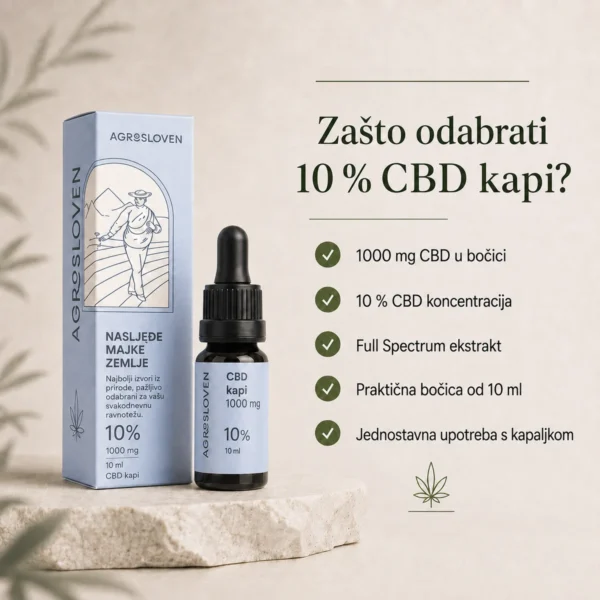
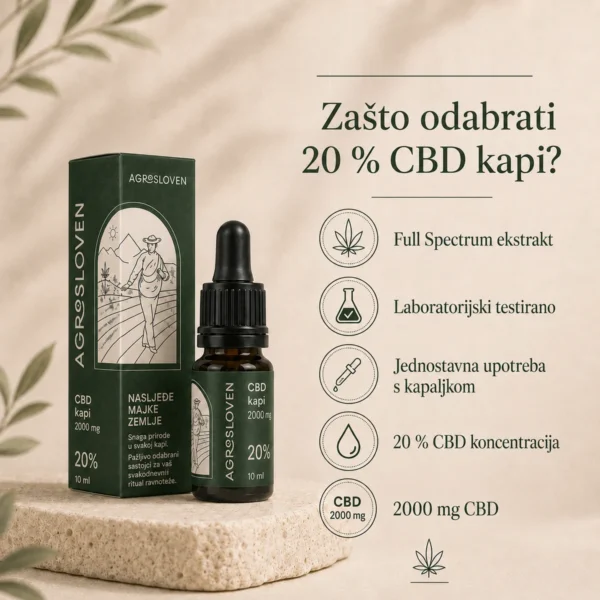
Frequently asked questions
What is CBD?
Cannabidiol is one of over a hundred cannabinoids found in the hemp plant. It occurs mainly in the flowers and leaves, not in the seeds.
Is CBD psychoactive?
No. Unlike THC, it does not bind to CB1 receptors in a way that produces a psychoactive effect.
Does CBD oil contain THC?
Full spectrum extracts contain trace amounts, below the legal limit of 0.2 %. The measured value for each batch appears in the certificate of analysis.
How is CBD extracted?
The extract is made from the flowers and leaves of our own hemp. Every batch is analysed in the laboratory, and the certificate is in the Certificates tab on the product page.
Note: hemp products are not medicines. They are not intended to diagnose, prevent, treat or alleviate any disease or health condition.
Explore in our shop: CBD drops · all Agrosloven products.

I know cbd, we bought it for my mother, it was the only thing that helped her with a serious illness. Rheumatoid arthritis, I still have some resin and we use it for toothache. It is effective and should be accessible to everyone.
Ivan
Pingback: CBD kanabinoid in preventiva - Eko Dežela